
Which Obedience Class Is Right for My Dog?
If you’re trying to figure out which obedience class your dog should take, here’s the short answer:
most dogs start in Foundational, even if they “know some stuff.”
Our group obedience classes at Copilot Dog Training are set up as a progression — Foundational, Intermediate, then Advanced — so dogs build real-life skills instead of skipping steps and getting overwhelmed. Below, we’ll help you figure out where your dog fits best.
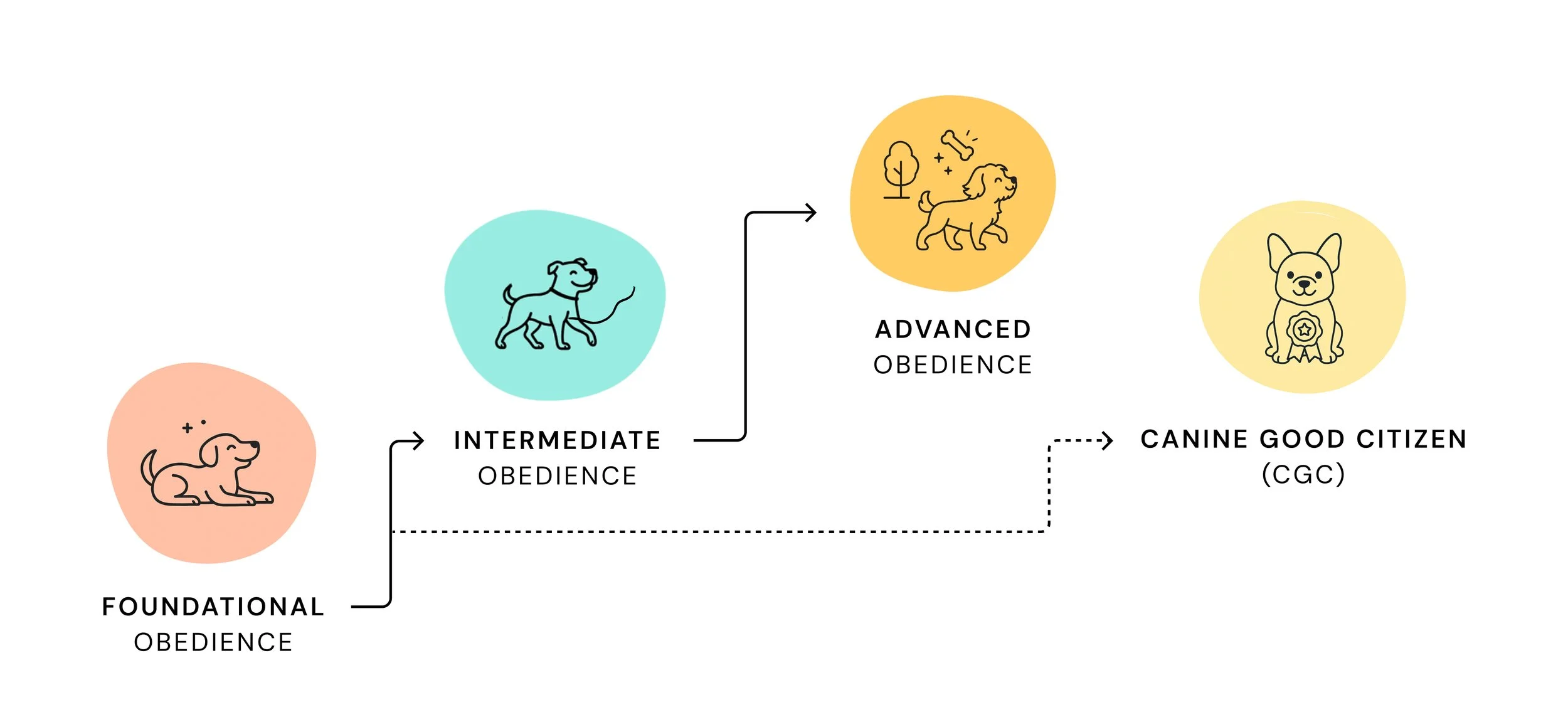
How Our Group Obedience Classes Work
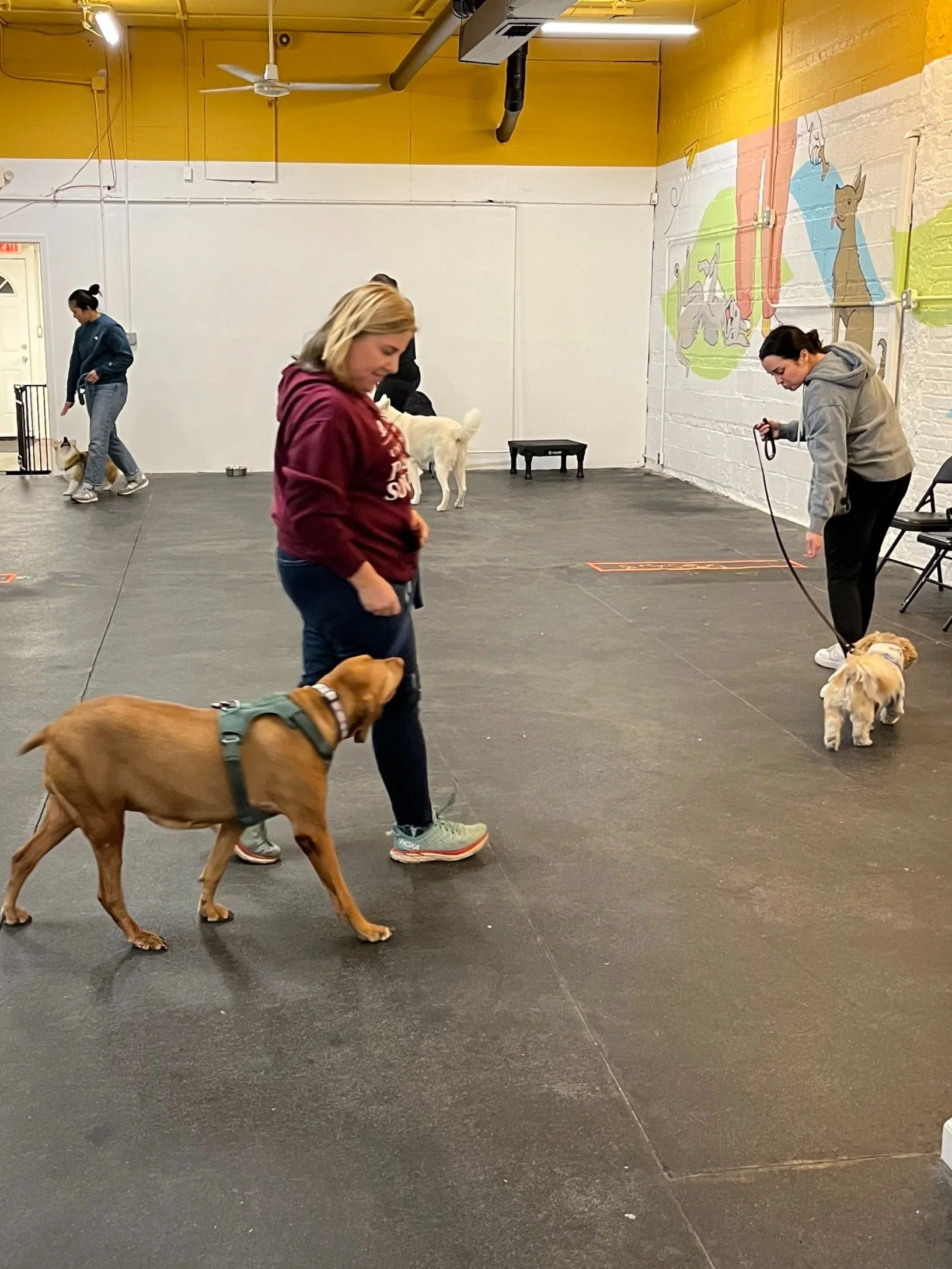
Copilot Dog Training group classes are small, structured group classes designed to help dogs learn how to work around other dogs, people, and distractions — because that’s where things usually fall apart. Your dog doesn’t need to be perfect. They just need to be in the right level so we can build skills that stick.
Each class typically ranges from 4–6 students depending on the class type. Our goal is to have enough people/dogs (distractions) to give your dog a challenge, but not put them over threshold. You’ll see a range of breeds, ages and personality types in class. For big feelings dogs, we put up barriers to make your pup feel safe.
Foundational Obedience: Where Most Dogs Start
Foundational Obedience is all about teaching your dog how to learn and stay engaged, not just running through cues.
Best for:
Dogs new to training
Easily distracted dogs
High-energy dogs
Dogs who need a reset
We focus on:
Sit, down, and stay
Down stays
Leave it
Touch
Intro to loose leash walking
Eye contact and engagement
“Find it” for focus and regulation
This class is a great fit if your dog:
Struggles to focus around other dogs
Gets overwhelmed in new environments
Is a recent rescue figuring things out
Knows cues but only uses them selectively
If you’re unsure where to start, this is almost always the right answer.
Prerequisites:
Dogs must be 6 months or older and vaccinated.
Intermediate Obedience: Similar Skills, More Reliability
Intermediate Obedience is where we take familiar skills and make them more consistent and usable in the real world.
Best for:
Dogs who know the basics but lose them when distractions show up
We work on:
Relaxation and settling
Heel
Place
Trick training (yes, it helps)
Strengthening leash walking
Proofing skills around distractions
This class is ideal if your dog:
Listens sometimes
Gets distracted easily
Needs better impulse control
Has a hard time settling in stimulating environments
Prerequisites:
Foundational Obedience (Adult 1) or instructor approval, 6 months or older, vaccinated.
Advanced Obedience: High Distractions
Advanced Obedience focuses on combining behaviors, working at a distance, and handling higher-level distractions.
Best for:
Dogs with solid foundations who are ready for more challenge
We work on:
Chaining multiple behaviors together
Long-distance sit and down
Advanced leash reliability
Working through more complex environments
This class is a good fit if your dog:
Has strong basic obedience
Is ready for more precision
Needs skills that translate to real-life situations
Prerequisites:
Foundational + Intermediate Obedience or instructor approval, 6 months or older, vaccinated.
Can My Dog Skip a Level?
Sometimes!
Skipping levels usually sounds good on paper but feels frustrating once you do it. Building skills step by step tends to be faster, cleaner, and way less stressful for everyone involved. If you’re unsure, we’re happy to help you decide. Reach out to us for guidance on the right level for your pup.
Ready to Join Our Group Obedience Classes?
Most dogs don’t struggle because they’re bad at obedience—they struggle because the skills they learned don’t hold up outside of class.
Our obedience classes are built for city life in Chicago: tight sidewalks, apartment buildings, other dogs in the neighborhood, noises, movement, and distractions that don’t politely wait their turn.
Here’s what classes look like at Copilot Dog Training:
We prioritize comfort before compliance
Dogs are allowed to opt out, take space, and move at their own pace. Learning happens faster when dogs feel safe and understood.
Games that make learning stick
We build a lot of pattern games and movement into class because dogs learn faster (and better) when training feels fun instead of rigid.
Small class sizes = more coaching
Fewer dogs means more coaching, more feedback, and time for actual questions — not just running through a checklist and calling it a day.
Progression that makes sense
Foundational → Intermediate → Advanced. Seamless step ups, no pressure to rush, and no pretending your dog is “ready” when they’re not. Take a class as many times as you’d like or jump up to the next if you’re ready.
A realistic, supportive environment
Dogs don’t need to be calm, perfect, or “finished” to be here. In fact, we have tons of classes that support the not-so-calm crowd! All your dog needs is a place where learning feels clear and fair; we’ve got you.
FAQs
What age does my dog need to be for obedience classes?
Dogs must be 6 months or older and up to date on vaccinations to join our group obedience classes. For dogs 5 months and under, check out our Puppy 1 class—a mix of basic obedience, socialization with other puppies, confidence building and more.
How do I know which obedience class my dog should start in?
Most dogs do best starting in Foundational Obedience, even if they already know sit or down. Foundational focuses on engagement, focus, and learning how to work around distractions — which makes everything else easier later.
Can my dog skip Foundational Obedience and go straight to Intermediate?
Sometimes, but we don’t typically recommend it to most pups. Dogs who skip levels can struggle with consistency in a group setting. If you’re unsure, starting in Foundational is almost always the smoother (and less frustrating) option. It’s better for your dog to get in a ton of really successful, easy reps in Foundational than struggle in Intermediate.
What if my dog is shy, reactive, or easily overwhelmed?
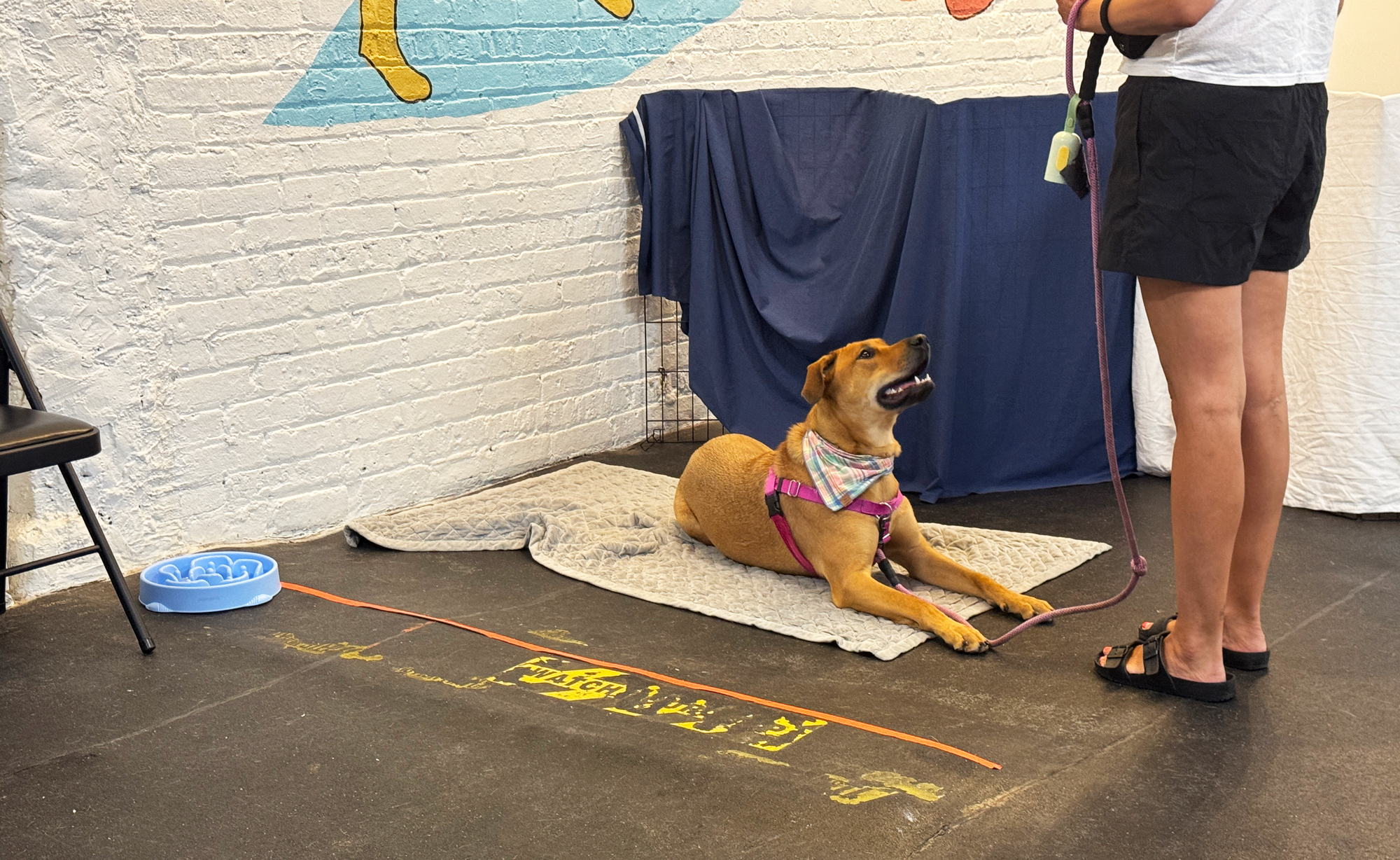
That’s okay. Our classes are small, structured, and designed to meet dogs where they’re at. Dogs are allowed to take space, opt out, and move at their own pace. We can even set up visual barriers to block out the overwhelm of seeing other dogs.
And if group classes aren’t the right fit yet, we can help you decide on next steps. We also offer private training lessons right in your home.
Are group obedience classes good for city dogs?
Yes! Especially Chicago dogs. Our classes focus on skills that translate to real life in Chicago, like leash walking, focus around distractions, and settling in busy environments.
What if I sign up and realize we’re in the wrong level?
No worries! We’re happy to help you adjust if needed. Just reach out to us via email here. The goal is to set you and your dog up for success, not lock you into the wrong class.
How many dogs are in each class?
We keep class sizes small (6 dogs max) so trainers can give real-time feedback, answer questions, and make adjustments for individual dogs.
What training methods do you use?
We use positive reinforcement methods that prioritizes clarity, comfort, and real-world skills. No forcing, no intimidation, and no expecting dogs to be robots.