
How to Stop Your Dog From Barking at Other Dogs on Walks in Chicago
Leash reactivity is one of the most common behavior issues we see in Chicago. A dog is calm inside, the leash goes on, another dog appears across the street, and the barking and lunging start instantly.
This behavior usually isn’t random and it usually isn’t true aggression. It’s a learned response to stress, frustration, or over-arousal. In a dense city environment where dogs regularly pass within a few feet of each other, those responses get rehearsed often.
If you want the behavior to change, the strategy has to change.
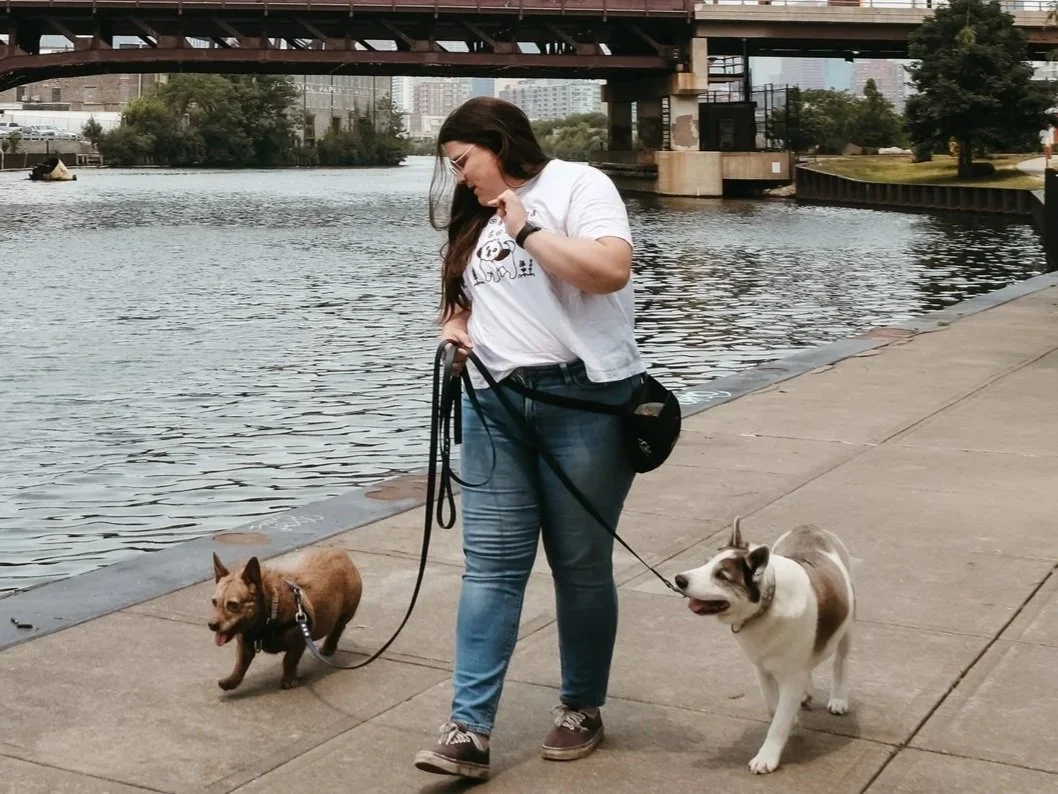
Why Leash Reactivity Is Common in Urban Dogs
City dogs live in constant stimulation. Even before another dog appears, they are processing traffic noise, smells, movement, tight sidewalks, elevators, and unpredictable triggers. That background stimulation raises arousal levels.
When a dog is restrained on leash, their movement options are limited. They cannot approach naturally, arc away, or create their own space. Restraint increases tension. If the dog already feels stimulated, the added pressure of the leash can push them over threshold quickly.
This is why many owners say, “He’s fine at daycare,” or “She plays great off leash.” The leash changes the equation.
Understanding Threshold & Why Timing Matters
Threshold is the point where your dog shifts from thinking to reacting.
Below threshold, your dog can respond to cues, take food, and disengage. Above threshold, their body takes over. Barking, lunging, stiff posture, and pulling happen automatically.
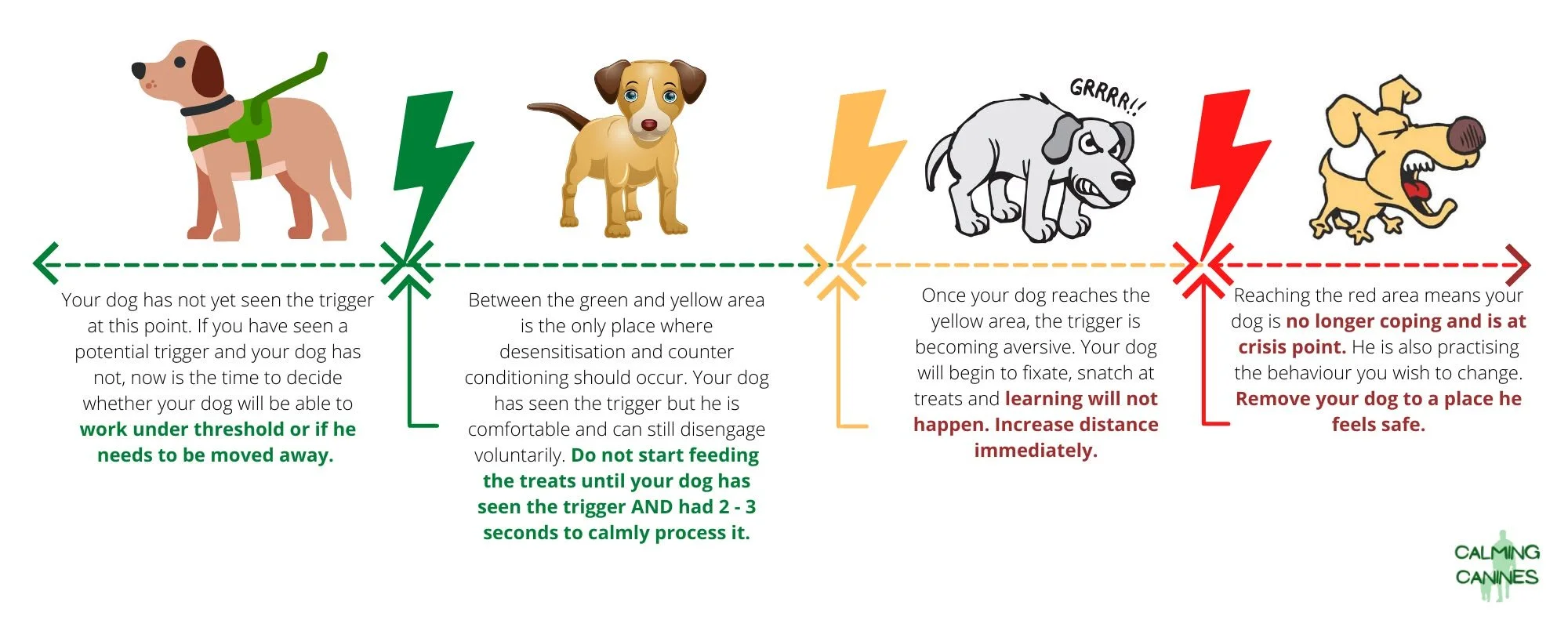
Understanding threshold is key to reducing leash reactivity. Real training happens in the green zone — before your dog tips into yellow or red. Timing and distance make the difference.
Why Corrections Won’t Solve Reactivity
Once your dog is above threshold, learning is limited. Correcting in that moment may suppress behavior temporarily, but it doesn’t change the emotional response driving it.
If the goal is long-term improvement, training has to happen when your dog can still think. That means recognizing early body language — staring, slowing down, ears forward, body stiffening — and intervening before the explosion.
01. Manage Distance Intentionally
Distance is not avoidance. It is a training tool.
If your dog reacts at 20 feet, working at 20 feet will fail. You need enough space for your dog to notice the trigger without escalating. In Chicago, that often means planning ahead: crossing early, turning down a side street, or using parked cars as visual barriers.
Why Distance Creates Learning
When distance is sufficient, your dog can:
Look at the other dog
Stay physically loose
Take food
Reorient back to you
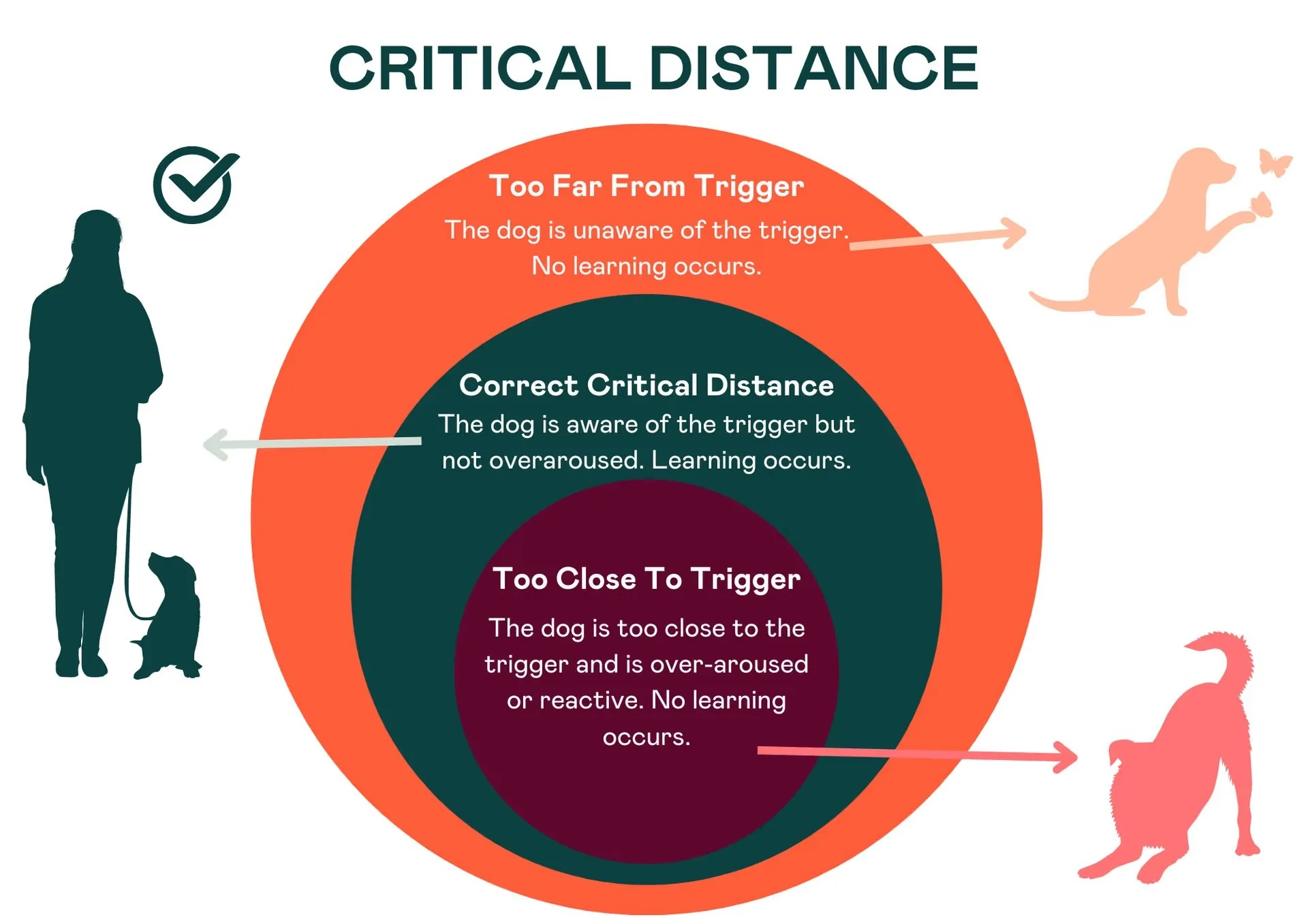
Critical distance matters. Training works when your dog notices the trigger but isn’t over-aroused. Too far or too close, and learning doesn’t happen.
That is the window where new patterns are built. Without distance, you’re just managing damage.
For dogs that are already reacting daily on walks, structured programs like our Reactivity & Behavior Training focus on systematically rebuilding these skills instead of relying on guesswork.
02. Build Skills Before Testing Them
Many owners attempt to “practice” around other dogs before foundational engagement is strong. If your dog cannot walk on a loose leash in a quiet area, they will not suddenly succeed on a busy block.
Foundational Skills Matter
Reliable leash work includes:
Responding to their name outside
Staying connected while moving
Slowing their pace when you slow
Choosing to disengage
These skills are built first in low-distraction environments. Our Foundational Obedience Classes are designed around this exact progression — stability first, distractions later.
Reactivity work layered on top of unstable foundations rarely holds.
03. Lower the Baseline Arousal
Some dogs don’t just react to one trigger. They live at a higher baseline. This is common in city dogs who experience constant stimulation. When the baseline is elevated, reactions appear sudden. In reality, the nervous system was already overloaded.
Lowering baseline arousal can include
shorter walks
decompression time
structured enrichment
practicing calm behaviors indoors
Training does not only happen during exposure to triggers. Regulation is trained in neutral moments.
Special Considerations for Rescue Dogs
Newly adopted dogs are especially prone to higher baseline stress. They are adjusting to a new home, new routines, and new environments. Expecting immediate stability outside often backfires.
Our Rescue Dog Training programs prioritize settling, routine building, and emotional regulation before focusing heavily on public behavior.

Enrichment like food puzzles and lick toys can help lower overall arousal and support calmer behavior on walks.
What Progress Looks Like
Improvement is gradual and measurable. Instead of immediate silence, you may notice:
Shorter reaction duration
Faster recovery
Less body tension
Increased ability to move away
Those small shifts compound over time. Consistency and proper setup matter more than intensity.
When to Seek Help from a Dog Trainer
If your dog is redirecting onto you, escalating in intensity, unable to recover after triggers, or has caused injury, professional guidance is important. In a dense city like Chicago, unmanaged leash reactivity can quickly limit where and how you can move comfortably.
Structured training provides a clear plan: when to increase difficulty, when to step back, and how to measure progress.
The TLDR:
Leash reactivity in Chicago is common because the environment is demanding. Improvement requires managing distance, working below threshold, strengthening foundational skills, and lowering overall arousal.
It is not solved through punishment or forced exposure.
With the right structure and consistency, most dogs show meaningful improvement within weeks, and walks become manageable again instead of stressful.